











Live
JAVA
CORE
Live Mentorship by Experts | Course Completion Certificate | Internship Certificate
Register Now in 999
Other Pay Later
Enroll NowOther Pay Later
Get our counsellor to guide you
Pricing Plans
Elevate your skills with hands-on experience, 12+ live projects, and mentorship from industry-leading experts in the top 2% of their field. Our tailored plans cater to your unique needs, allowing you to transform your practical knowledge into real-world expertise.


Our Students Placed at

Course overview
These courses are for anyone who is ready to embark on a transformative
learning journey. Whether you are looking to enhance your skills for personal
growth or seeking professional development, we are here to support you
every step of the way. With our focus on delivering value and enriching the
learning experience, you will gain practical skills that will set you apart from
the competition and help you excel in your desired field.
COURSE STRUCTURE
INTRODUCTION TO JAVA
-
Overview and Features of Java Programming
Language
-
Architecture Of Java
-
JDK, JVM, JRE overview
-
Discussion on Source Code and Bytecode
-
“Hello World” on JAVA
-
Editors and Eclipse IDE
BASICS OF JAVA PROGRAMMING LANGUAGE
-
Data types and Variables
-
Keywords in JAVA
-
Common Operators in JAVA
-
Primitive Datatypes
-
Introduction to Strings datatype
-
Datatypes Casting – Widening & Narrowing
Conversions
-
For, While loops
-
Switch case and if blocks
-
Basic Programs using the learned concepts
METHODS/FUNCTIONAL PROGRAMMING IN JAVA
-
Methods, & Classes overview
-
Discussion on industry standards
-
Method Structure Declaration
-
Method calls type and return type.
-
Method Parameters Scope
-
Static methods and Intro to static keyword
-
Packages and Static imports
ARRAYS AND STRINGS
-
Intro to Arrays
-
Properties and functionality of an array
-
Strings Methods and Properties
-
Basic Programs on Strings and Arrays
-
Mutable and Immutable Strings
-
String Buffer and String Builder
-
Command-line arguments using args[]
OOPS (OBJECT ORIENTATION PROGRAMMING)
-
Overview
-
Need and Benefits of OOP
-
Pillars of OOPs
-
“new” Keyword
-
Discussion on HEAP memory and Garbage
Collector
-
Constructors
-
Super and This Keyword
-
“static” keyword w.r.t. to OOP
PILLAR 1: ENCAPSULATION
-
Access modifiers
-
Setter and getters
-
Final keyword
PILLAR 2: INHERITANCE
-
Importance of Inheritance and Types of
Inheritance
-
Single Inheritance Multi-Level Inheritance
Hierarchical
-
Inheritance
-
Super keyword w.r.t. to Inheritance
-
Access modifier w.r.t. to Inheritance
-
Intro to Object Class Methods
PILLAR 3: POLYMORPHISM
-
Method Overloading
-
Method Overriding
-
Runtime and Compile time polymorphism
-
toString, equals method manual overriding
-
Override Annotation
PILLAR 4: ABSTRACTION
-
Discussion for Abstraction
-
Abstract keyword
-
Difference between concrete and
abstract Methods
-
Interfaces
-
Marker Interface and its usage
-
Intro to Functional Interface
-
Lambda /Innerclasses and
Functional Interfaces
EXCEPTION HANDLING
-
Exceptions and Errors in JAVA
-
Exception class Hierarchy
-
Try, catch and finally block
-
Try with Resource and Autocloseables
-
Throw and throws keywords
-
Default Exception Handler
-
Custom User Defined Exception Handler
-
Corner cases and best pratices.
COLLECTION FRAMEWORK IN JAVA
-
Collection Interface hierarchy
-
ArrayList
-
Set
-
LinkedList
-
Traversing using Iterators
-
Fail-Safe and Fail-Fast Way of using Collection
-
Comparator and Comparable usage
-
Map Interface Hierarchy
-
HashMap
-
Purpose of various Collection Classes
FILE HANDLING AND I/O
-
Various File Types
-
Common filetype and Usage
-
File operations using Java
-
InputStream and OutputStream in Java
-
Read and Write Operation on a text file using
Stream
-
Serialization and Deserialization and best
pratices.
MULTI-THREADING
-
Parallel Processing Computation and its
Advantage
-
Thread in JAVA
-
Achieving Multi-Threading in JAVA using Thread
class and
-
Runnable interface
-
Thread Pool
-
Thread State and its Lifecycle
-
Deadlock event
-
Concurrency and Thread Safety
-
Synchronization
-
Volatilite keyword for visibility
-
Atomic Integer
Learning Objectives
-
Learn HTML, CSS, and JavaScript to build responsive front-end interfaces.
-
Master back-end development using Node.js and Express.js.
-
Understand SQL and NoSQL databases for storing and managing data.
-
Use Git and GitHub for effective version control and collaboration.
-
Deploy full-stack applications using platforms like AWS, Heroku, or Vercel.
-
Build real-world projects with authentication, APIs, and modern frameworks.
Learning Methods
- Presentations & Lectures
- Hands-On, Project-Based Learning
- Live Mentorship Sessions
- Self-Paced Learning & Recorded Lectures
Learning Outcome
By the end of this course, you will confidently build full-stack web applications from scratch, integrate APIs, manage databases, and deploy live projects. You will gain job-ready skills in both front-end and back-end development with hands-on practical experience.
How to Enroll Program
Our mentors from








Would you like to know more?
Explore the course in detail by downloading the brochure.
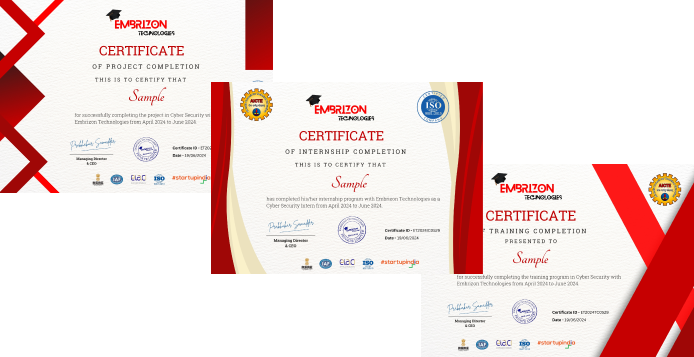
Download CurriculumCertify your learnings
You’ll receive a certificates from our side
Frequently Asked Questions
What is the difference between the Live and Self-Paced courses?
-
Live Class:
- Offers real-time interaction with mentors.
- Includes scheduled live sessions where you can ask questions and get instant feedback.
- Provides personalized mentorship through live engagement.
-
Self-Paced Class:
- Access pre-recorded video content at your convenience.
- No fixed schedule – you can learn whenever it suits you.
- Get mentor support via pre-scheduled mentoring sessions without the need for live attendance.
Will I receive a certificate after completing the course?
Yes, upon successful completion of the course, you will receive a Certificate for Course Completion.
What type of projects will I be working on?
ou’ll be working on 5+ live projects that are designed to give you hands-on experience and practical knowledge.
How much mentor support is provided in the Self-Paced course?
The Self-Paced course offers 15+ hours of mentor training to help guide you through the course and projects.
How do I enroll in the Self-Paced course?
You can easily enroll in the Self-Paced course by clicking on the Enroll Now button and completing the registration process.